
H1: Baccarat vs Blackjack: Which Has Lower House Edge for Australian Players
When you sit down to compare baccarat vs blackjack which has lower house edge, the answer looks clean on paper but gets murkier once you factor in how Australian venues price action and how players actually behave at the table. I’ve spent years structuring data partnerships across financial services and iGaming, and the pattern is consistent: the game with the tighter theoretical edge only wins if the player’s bet sizing, pace, and side-bet discipline hold up under real conditions. Below, I’ll walk through the numbers, the practical trade-offs, and what a Hobart-based player should weigh before choosing a table.
The maths behind the edge
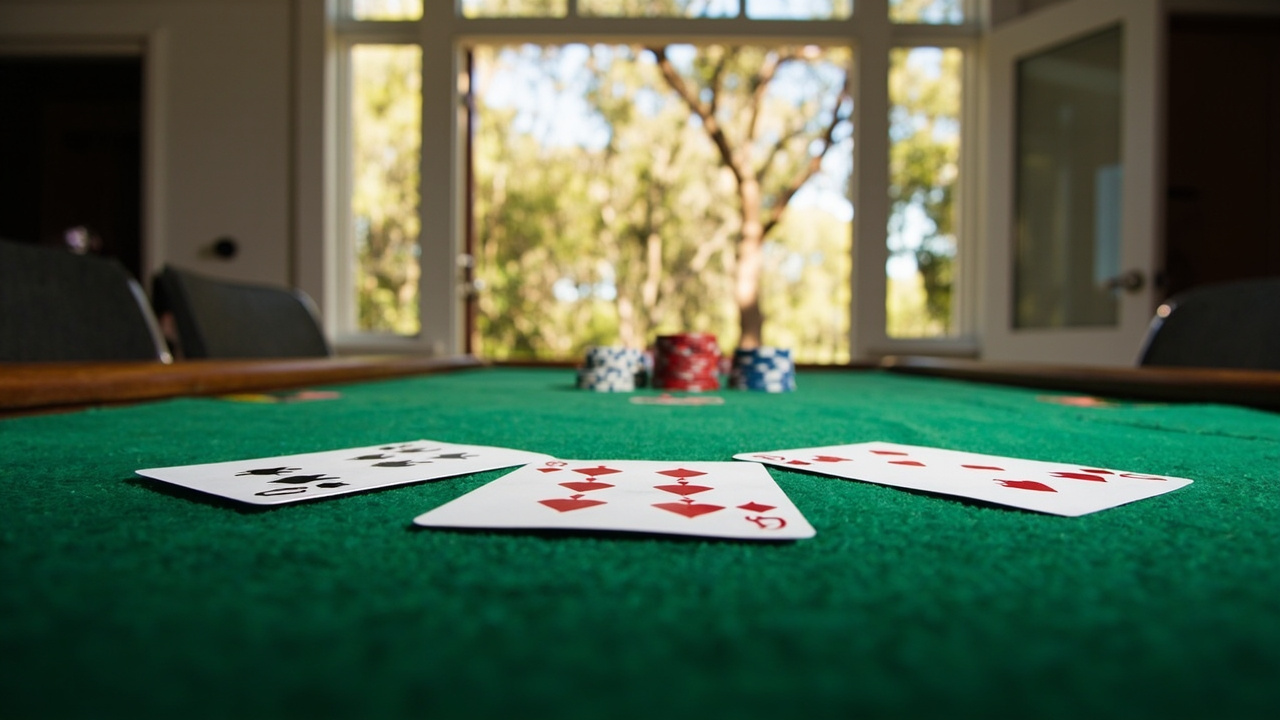
Baccarat’s core bet on the banker carries a house edge of roughly 1.06 per cent after the standard commission, while the player bet sits around 1.24 per cent. The tie wager is where the edge balloons to over 14 per cent, which is why disciplined tables strip it out of serious play. Blackjack’s base edge can dip below 0.5 per cent when you play perfect basic strategy against a 3:2 payout table, but most Australian floors run 6:5 tables that push the edge back toward 1.5 to 2 per cent before you factor in shuffle style and penetration.
That gap is where my work in measurable outcomes matters. In data and AI partnerships, we learn quickly that a theoretical figure only becomes useful when you model the actual distribution of bets, not the headline number. A player who treats blackjack as a low-edge game but routinely hits insurance or takes even-money deals has effectively rewritten their own table economics. Baccarat, by contrast, removes most of those decision branches: you pick a side, the cards run, and the commission is the main variable you can control. https://big-bass-amazon-extreme-demo.com/pokie/
For a quick reference, here’s how the practical edge shifts when you change common variables:
- Banker bet with standard 5 per cent commission stays near 1.06 per cent
- Player bet without commission stays near 1.24 per cent
- Blackjack 3:2 with correct basic strategy can approach 0.5 per cent
- Blackjack 6:5 with correct basic strategy usually climbs above 1.5 per cent
- Side bets in either game typically lift the edge well above the main line
That is the part many players miss when they ask baccarat vs blackjack which has lower house edge, because the answer depends on which version of each game is actually on offer. Desugami
Where the real edge lives at the table
Blackjack: strategy is the variable
Blackjack rewards precision, and that is both its appeal and its weakness. The same shoe can be a low-edge environment or a mid-edge one depending on rule wording, deck count, and how often a player deviates from basic strategy. A 3:2 table with deep penetration and a disciplined player is a different proposition from a 6:5 table where the payout alone adds a meaningful tax to every blackjack. I’ve seen partnership dashboards where the “low-edge game” label looked accurate until we layered in bet frequency and side-wager share, and the effective edge moved sharply.
Some operators argue that blackjack’s interactivity is the selling point, not the raw edge. Their view is that players pay for control and decision-making, and a slightly higher theoretical edge is acceptable when the game responds to skill. That argument has merit for engaged players, but it falls apart the moment a table switches to 6:5 or a player starts taking insurance as a habit. The maths does not care how engaging the moment feels.
Baccarat: simplicity keeps the edge stable
Baccarat is less interactive, which is exactly why its edge stays more predictable. There are fewer decision points, so there are fewer places for a player to introduce variance through mistakes. The banker bet’s edge remains tight, and the commission is the main cost you can forecast. The trade-off is that you cannot “play better” in a way that meaningfully lowers the house edge beyond choosing banker over tie and avoiding side wagers.
A responsible gambling adviser I’ve worked alongside, Lachlan Foster from Outback Gaming Research, has cautioned that baccarat’s calm pace can mask how quickly session loss accumulates when bet sizes drift upward after a run of hands. His point is not that baccarat is worse; it is that the absence of decisions can make it easier to ignore bet control. That is a fair caveat, and it lines up with the data I’ve reviewed across iGaming and sport partnerships, where the biggest swings often come from pacing rather than the game’s theoretical edge.

Matching the game to how you actually play
The better choice depends less on the label and more on your habits at the table. If you are willing to learn and stick to basic strategy, and you can find a 3:2 blackjack table with decent penetration, blackjack can offer a lower practical edge than baccarat’s banker bet. If you prefer a simpler rhythm, want fewer decision traps, and will consistently avoid the tie and side bets, baccarat’s banker line is a stable, low-edge option that does not require strategy maintenance.
A payments strategy director I’ve collaborated with, Dylan Edwards from Blue Gum Gaming Council, has noted that the edge conversation often ignores how table minimums and session length interact with bankroll planning. His view is that a low-edge game with a high minimum can be less comfortable in practice than a slightly higher-edge game with a pace that fits your bankroll. That is a useful reminder: the edge is one input, not the whole decision.
For an Australian player weighing this in a Hobart club or comparing options online, the practical test is straightforward. Pick the version of the game that matches your willingness to study strategy, check the payout rules before you sit down, and treat side bets as a separate cost rather than part of the main line. If you want a closer look at how to choose a pokie with a similar eye on return mechanics, you can browse this pokie page for a parallel way to think about game selection.
Verdict
If your priority is the lowest practical edge and you can commit to basic strategy on a 3:2 table, blackjack can edge out baccarat. If you want a lower-maintenance game with a stable edge and you will stick to banker while avoiding tie and side wagers, baccarat is the cleaner pick. The right answer is the one that fits your discipline, your table selection, and the way you actually manage your bankroll.